Understanding Frameless Cabinets: Key Features and Benefits
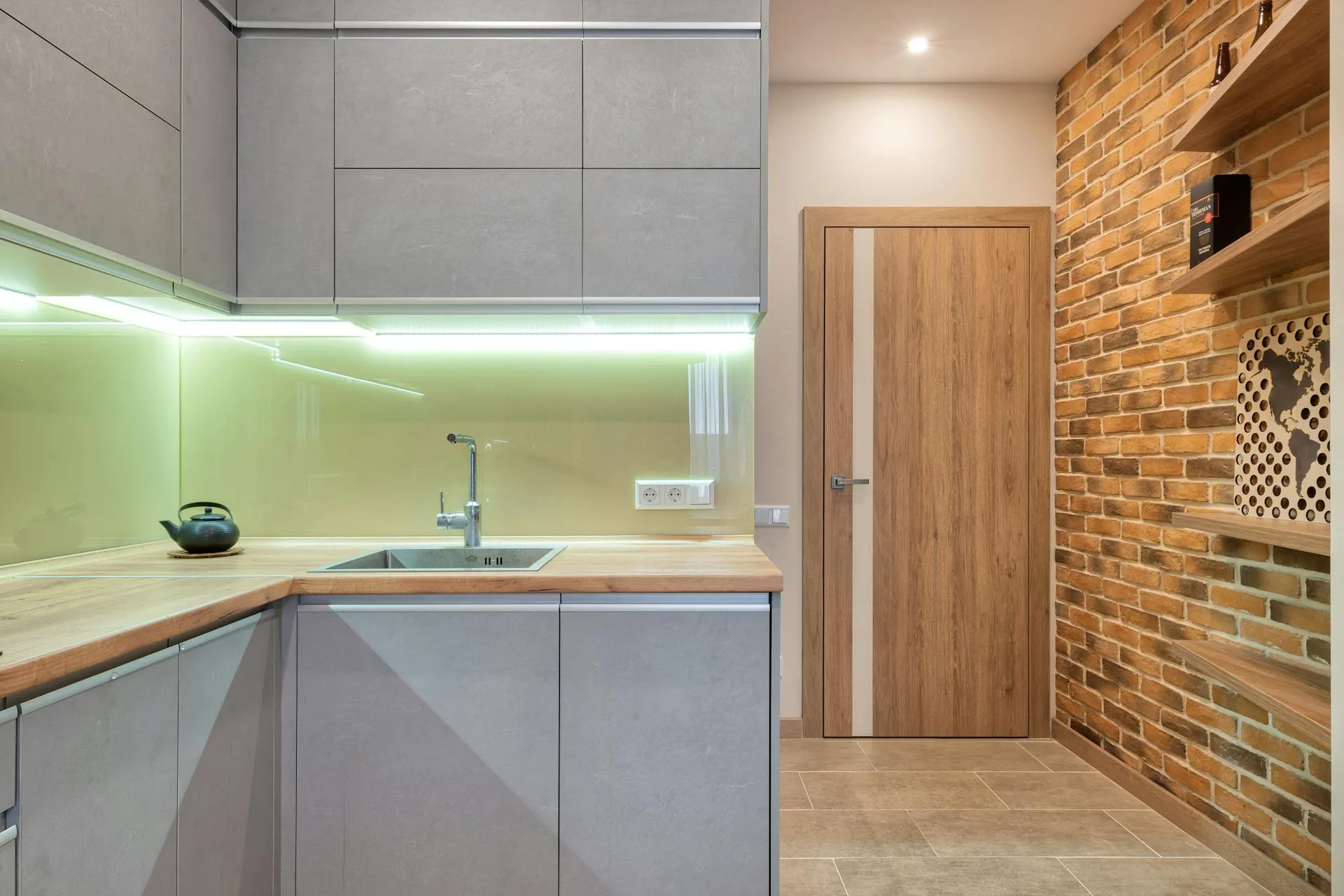
When planning a kitchen remodel, it’s easy to focus on what you’ll see on the outside—colors, handles, backsplashes. But what’s going on inside the cabinets matters just as much.
One of the biggest decisions you’ll face is choosing between framed and frameless cabinets. This single choice affects your cabinet box structure, your doors, and the way your storage works every day.
What Are Frameless Cabinets?
At first glance, frameless cabinets look sleek and clean. The real difference, though, lies in the cabinet box construction. Unlike traditional cabinets, these have no face frame attached to the front. Instead, the doors hinge directly to the sides of the cabinet box, creating a seamless appearance.
This style originated in Europe, where space efficiency and clean lines have long been a design priority—hence the term “European-style cabinets.” They’re also known as full overlay cabinets, because the doors fully cover the cabinet face.
Frameless cabinets offer full access to the interior, which means no center stiles or awkward corners to work around. You can slide in trays, store wide dishes, or reach everyday items without obstruction. Thanks to that contemporary design, frameless cabinetry is a popular choice for anyone who values function, simplicity, and a clean finish.
Framed vs. Frameless Cabinets
The key difference is the addition of a solid wood face frame between the door and the cabinet box on a framed cabinet. That frame provides structural support and serves as a mounting surface for doors and drawer fronts.
Framed Cabinets
Framed cabinetry features a visible solid wood face frame on the front of the box, built from horizontal rails and vertical stiles—a bit like placing a flat picture frame over the cabinet opening.
The result is extra structural rigidity and a classic look. The frame helps keep the box square over time, and it works well with inset doors, where the door sits flush inside the frame. Many homeowners still prefer the visual weight and structure framed cabinets provide, especially when aiming for a traditional, timeless kitchen. They pair well with a range of door styles, including raised-panel and classic Shaker.
Frameless Cabinets
Frameless cabinets skip the face frame entirely. The doors and drawer fronts cover the whole box, giving the kitchen a smooth, uniform finish. Because nothing projects inward, the interior is easier to reach—especially in lower base cabinets.
Eliminating the framework leaves more usable room inside the box for pans, plates, and pantry goods. When comparing the two, the accessibility and contemporary feel of frameless cabinets are what usually win people over.
Key Features and Benefits
Maximized Interior Space and Accessibility
The biggest perk is more usable cabinet space and fully accessible storage. Without the face frame, shelves are wider and access is easier. You won’t tilt pots sideways to fit them in, or fumble around an awkward corner trying to store plates. It’s a layout that simplifies storage and organization, especially in compact kitchens.
Sleek Aesthetics and Contemporary Appeal
Visually, frameless construction delivers a minimalist, high-end look. With full overlay doors, the door and drawer fronts align neatly with only a small reveal between them. That detail seems minor, but it makes a real difference to the overall feel of the kitchen, and it fits naturally with current design trends favoring sleek cabinetry, expressive materials, and curated finishes.
Construction and Installation
How Frameless Cabinets Are Built
Construction starts with the cabinet box. With no face frame, the doors mount directly to the gables—the vertical side panels—using concealed hinges. The full overlay doors completely cover the front, so the gables aren’t visible when the cabinet is closed.
To cover exposed edges, manufacturers apply edge banding that matches the cabinet finish and protects the material beneath, creating a fully polished result. While framed cabinets rely on the face frame for strength, frameless cabinetry uses thicker sides and precision joinery to maintain durability.
Installation Considerations
Installing frameless cabinetry requires precision. With no frame to mask small misalignments, every measurement has to be exact—particularly door and drawer openings and their alignment.
That’s why it’s worth working with a professional installer. CSL Construction has extensive experience delivering kitchen remodels, including careful installation of custom cabinetry. We make sure every unit is securely attached, perfectly level, and built to last.
Design and Customization Options
Door Styles, Finishes, and Materials
Think frameless means limited design possibilities? Not so. There are plenty of door styles to choose from—flat-panel, high-gloss, and textured or wood-look options with contrasting grain directions—all of which work with frameless cabinetry. For a broader comparison of cabinet styles, see our guide to the types of kitchen cabinets.
Custom Storage and Appliance Integration
Frameless doesn’t mean cookie-cutter. You can still add spice racks, pull-out shelves, soft-close drawers, and custom compartments to suit how you cook. These cabinets also pair beautifully with panel-ready appliances, making it easier to blend everything into a cohesive, high-functioning layout.
Overlays and Frameless Cabinets
Frameless cabinets rely on the full overlay method, where doors and drawer fronts cover the front face completely, leaving just a small reveal—a thin line between doors that signals a quality installation.
Partial overlay and inset doors, however, are off the table with frameless construction. Both require a frame to mount onto, which frameless cabinets simply don’t have. So if you’re set on inset doors, framed construction is the better fit. (Our guide to RTA cabinets covers how these overlay types compare in ready-to-assemble lines.)
Discover the Beauty of Frameless Cabinets in Central Florida
Whether you’re remodeling a classic home or building new, frameless cabinets give you a stylish edge without sacrificing practicality. With their sleek look, smart storage, and flexible styling, they offer the best of both worlds.
Still unsure which type is right for your home? At CSL Construction, we help Central Florida homeowners choose the cabinet construction that fits their lifestyle, taste, and budget—walking you through the differences, comparing finishes, and explaining how each option affects the box, the doors, and how your kitchen actually works.
Contact us today to learn how we can bring your vision to life.